Study Shorts
Huw had the audience and the teaching. Together we turned it into a revision app that 40,000 students now use.
- Product partner. App design and engineering
- iOS, Android
- Live on both app stores
What it is
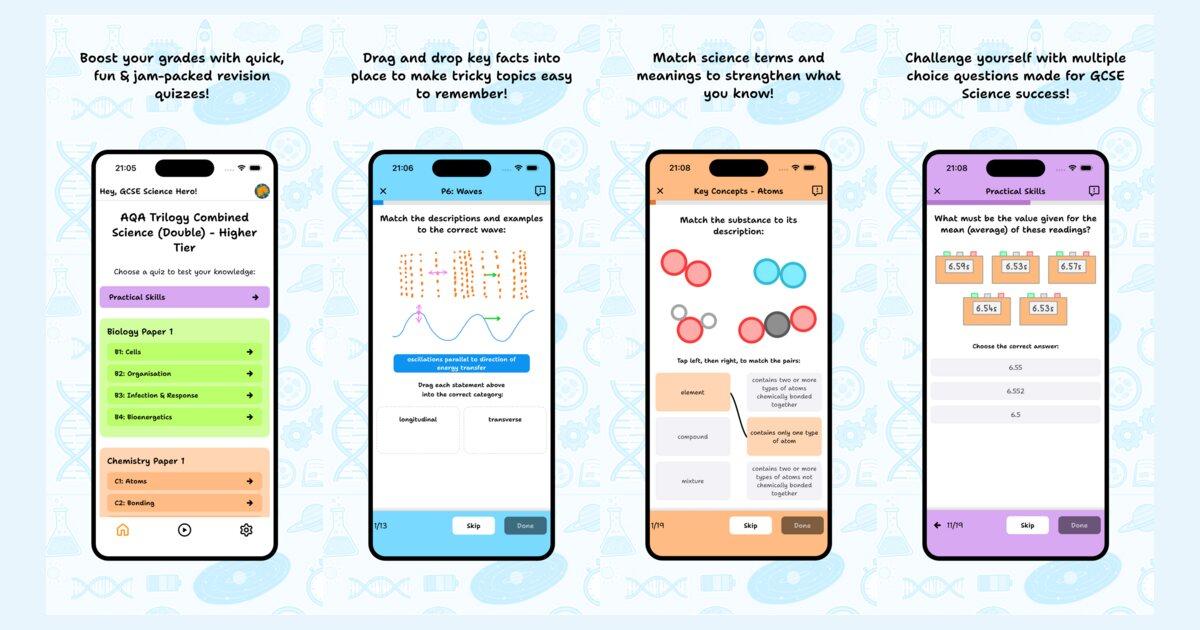
Study Shorts GCSE & A-Level is a revision app for iPhone and Android. Students pick their level, subject and exam board (AQA, Edexcel, OCR or general courses) and get straight into quizzes across Biology, Chemistry, Physics, Maths and English. Questions are organised by exam board, level, subject, topic and paper, so revision can be aimed at exactly what’s coming up. There’s a video tab of short tutorials for when a topic needs explaining again, and scores are tracked so students can see themselves improving.
Why it needed to exist
I built it with Huw from Science Shorts, whose YouTube channel already had a huge audience of GCSE and A-level students. They were watching the videos. What they didn’t have was somewhere to practise straight afterwards, in the same voice and with the same clear, hand-drawn style. The app is that place.
That’s the part I find most interesting about this project. The hard thing to build is usually the audience. Huw had already done it, and done it honestly, by being genuinely useful. The job was to turn that trust into a product without losing what made it work.
What I did
Huw and the Study Shorts team write and illustrate the questions and make the videos. I designed and built the app around them, for iPhone and Android, and I look after it as it grows.
How it’s built
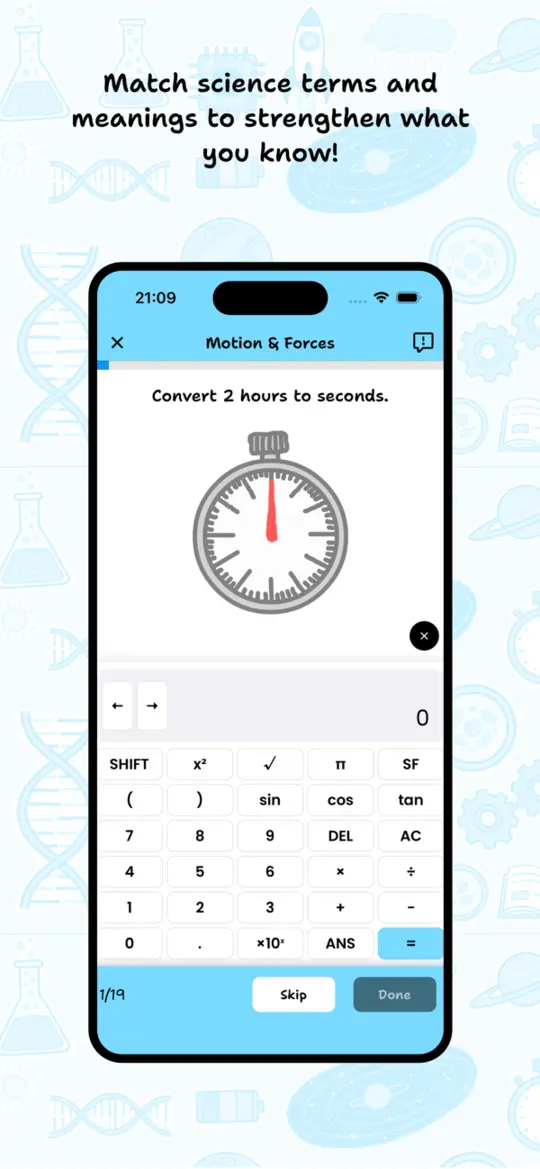
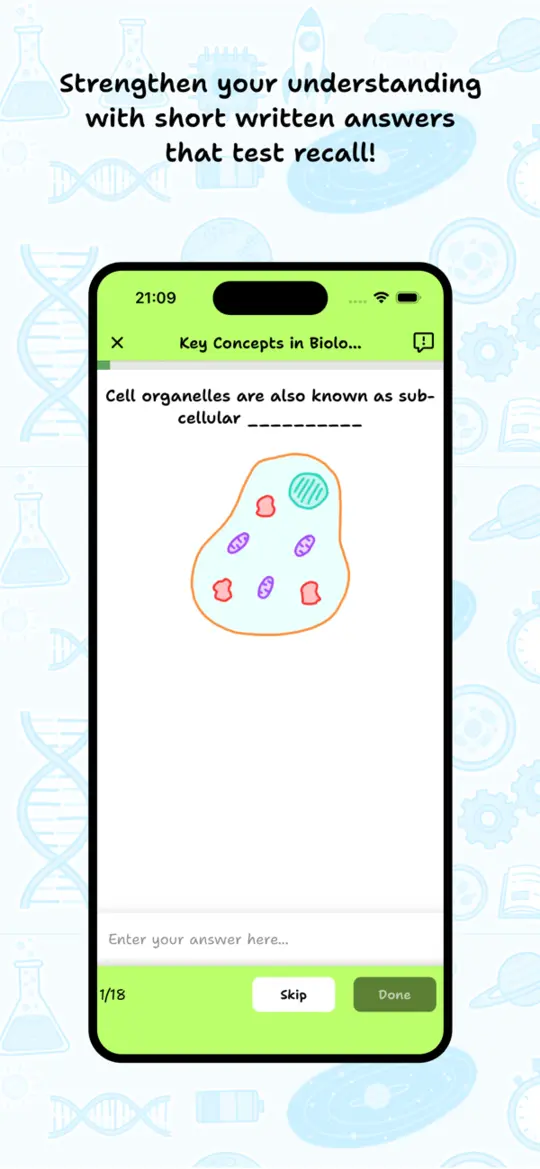
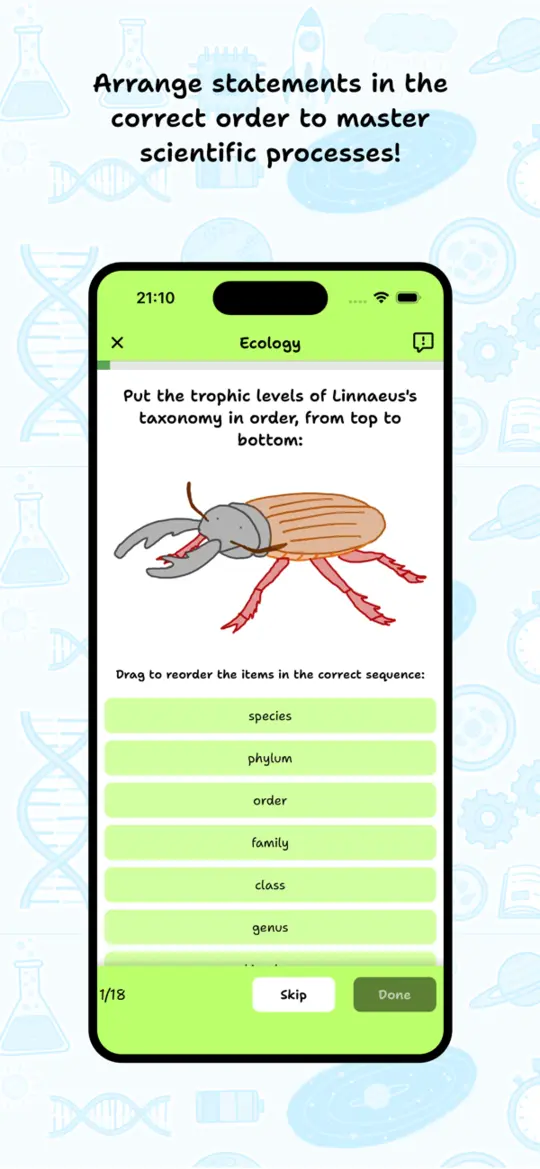
Exams don’t only ask multiple choice questions, so the app doesn’t either. There are four kinds of question: multiple choice, sorting and matching (drag a fact into place, or pair a term with its meaning), calculations, and short written answers. Each one is its own interaction, designed for a thumb on a phone screen. The calculation questions come with a scientific calculator built into the app, so nobody has to leave mid-question and lose their place.
Underneath, the content is structured the way the exams are: by board, level, subject, topic and paper. That structure is what lets the team keep adding questions without the app becoming a maze.
One decision I’d make again: no sign-up. A student opens the app, picks their course and starts revising. Asking a fifteen-year-old to create an account before they’ve seen a single question is the quickest way to lose them.
It also changed shape along the way. It started out as Science Shorts, and as it grew beyond the sciences into Maths and English it became Study Shorts.
How it’s going
40,000
students revising with the app
Students across the UK now use it for their GCSE and A-level revision, and it’s rated 4.4 on Google Play (November 2026). It’s free to start, with in-app purchases for full course packs.
What it means for your project
If you already have an audience, as a creator, a teacher, a community or a brand, you’re closer to a successful product than most start-ups ever get. The trick is building something that feels like a natural next step for the people who already trust you. That’s exactly what I’d help you do.
Got something you want built?
The same thinking and the same care go into other people’s products as into my own. Tell me what you have in mind, even if it’s rough.
Let’s talk