Dreamnl
An app where the most important AI decision was what it should never do.
- Founder. Product, design and engineering
- iOS, Android
- Live on both app stores
What it is
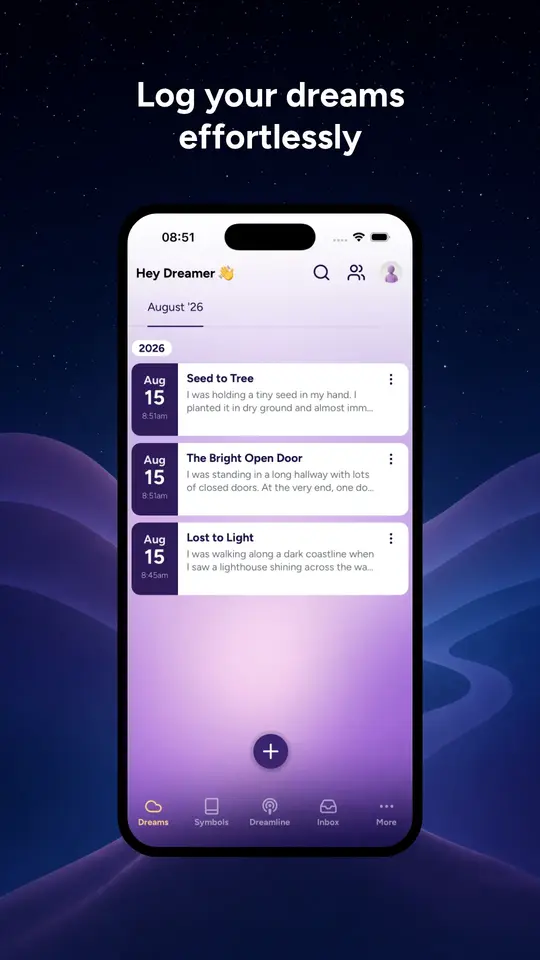
Dreamnl is a Christian dream journal for iPhone and Android. You record a dream the moment you wake up, by typing, by speaking or by photographing a page of an old paper journal. Then the app helps you reflect on it, pray it through and, over time, build your own dictionary of the symbols that keep appearing. You can keep it private, share a dream with a friend you trust, or publish a polished version when you feel led to encourage someone.
The rule it’s built around
The obvious version of this app would use AI to tell you what your dream means. Dreamnl never does, and never will. For the people it’s made for, interpretation belongs to God (Genesis 40:8), and an app that claimed to decode dreams would be working against them.
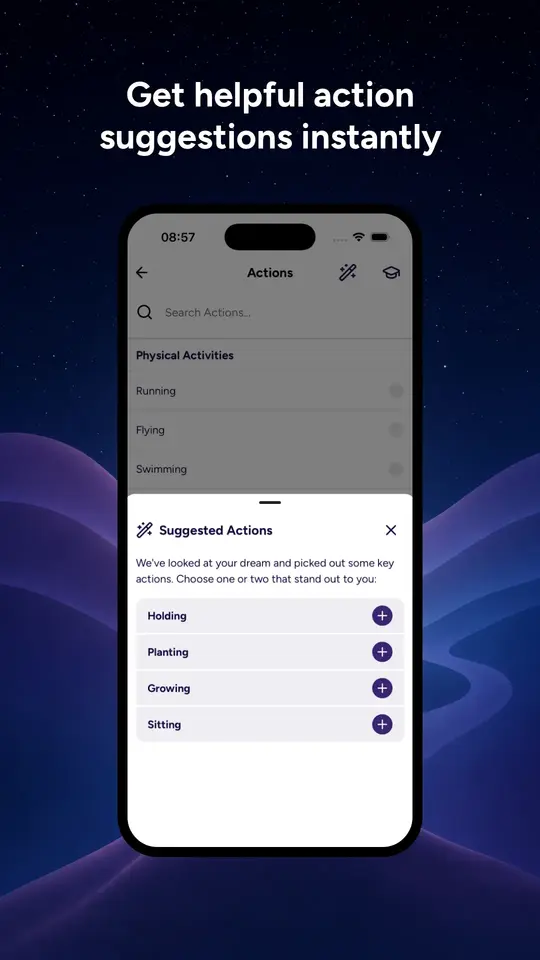
So the AI has a much narrower job. It gives you a gentle overview that mirrors back the key moments and themes in your own words, a few reflection questions shaped around your dream and season of life, and a prayer you can use as a starting point. It helps you notice. It doesn’t tell you what to think. For the same reason there’s no ready-made symbol dictionary: you build your own, and you can jump from any symbol to every dream it has appeared in.
What I did
Dreamnl is my own product. I shaped the idea, designed it, built the iPhone and Android apps and the website, and launched it.
How it’s built
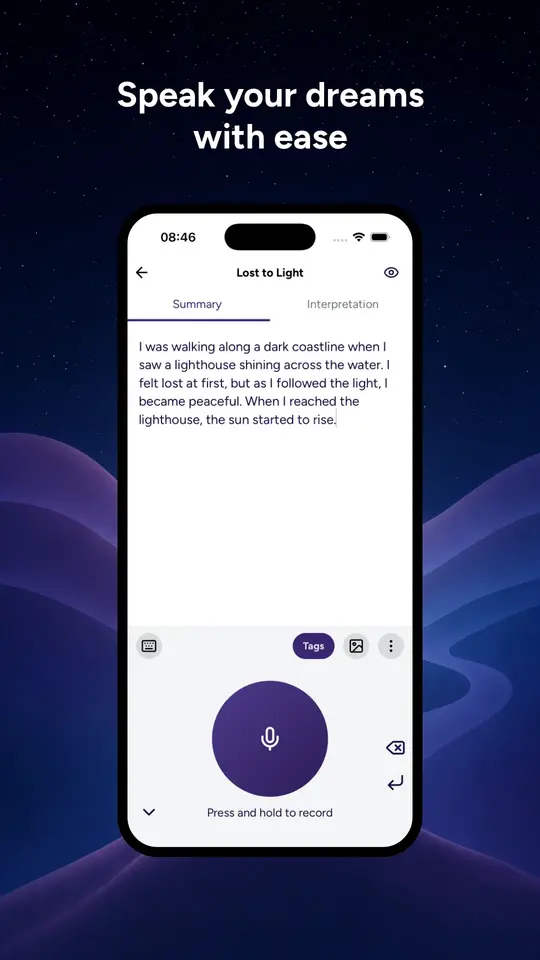
Most of the engineering is about getting out of the way. People record dreams half-awake, so voice recording is one press-and-hold, and transcription happens for you. Gentle daily reminders help with remembering in the first place. Handwritten journals can be imported from a photo, so years of paper entries don’t have to be abandoned. And everything is searchable by title, symbol or feeling.
The harder part is the AI itself. Getting a model to be helpful is easy. Getting it to be helpful while staying firmly inside the line of “reflect, never interpret” is a design problem as much as a technical one: what it’s asked to do, what it’s never allowed to say, and how it speaks to someone about something this personal. It’s the clearest example I have of treating AI as a tool to direct, not an answer to accept.
On the app stores it’s listed as Christian Dream Journal, because that’s what people search for. The brand inside stays Dreamnl.
How it’s going
Dreamnl is live on both app stores and has grown well beyond a simple journal. It now imports handwritten journals, lets you share dreams and pray with friends, and exports a single entry or a whole journal to a document. It’s rated 4.6 on Google Play (November 2026), and it’s free to download, with in-app purchases.
What it means for your project
If your product touches something personal, such as faith, health, money or family, the question isn’t whether AI can do something. It’s whether it should. Working that out, and then building AI that respects the answer, is the part most AI-made products skip. It shouldn’t be.
Got something you want built?
The same thinking and the same care go into other people’s products as into my own. Tell me what you have in mind, even if it’s rough.
Let’s talk